Takes about a minute. We'll follow up within one business day. No pressure, no upsells.
Round rock · Trusted Locally
Why Choose Over and Above Contracting for Roof Leak Repair That Finds the Source, Not Just the Drip
Your roof is leaking and you need it stopped before the next rain. Roof leak repair is the most time-sensitive call a roofer gets, and the part most companies get wrong is the diagnosis: water rarely enters where it drips. It travels along a rafter or the top of the decking and shows up feet away from the actual breach. Over and Above Contracting traces the leak to its real entry point, flashing, a valley, a penetration, a skylight, or a nail pop, before anything gets patched. Mike Ennis runs every job personally, so the person who finds the leak is the person who fixes it. If water is coming in right now, call (737) 230-7099. We prioritize active leaks.
Owner-operated out of Round Rock and serving the greater Austin metro and Williamson County, Over and Above has traced leaks on asphalt shingle, standing-seam metal, and low-slope flat roofs across Central Texas. Round Rock's freeze-thaw swings and hard summer UV break down flashing sealant and pipe-boot rubber years before the shingles themselves wear out, which is why so many leaks here start at a penetration and not in the open field of the roof. You get a straight read on where the water is getting in and what it takes to stop it. No upsell toward a full replacement when a targeted leak repair is the honest fix.
Where Roof Leaks Actually Start
Most residential roof leaks in Central Texas start at one of a handful of predictable failure points. Here is where we look first, and why each one lets water in.
Flashing at Walls and Chimneys
Step flashing along a chimney sidewall and counter flashing sealed into the mortar are the single most common leak source we find. Central Texas thermal cycling pulls the sealant loose and cracks the metal joint. Once it gaps, every rain runs straight down the chimney chase into the ceiling below.
Pipe Boots and Vent Penetrations
The neoprene collar around a plumbing vent stack is rubber, and rubber does not survive Round Rock summers. It hardens, splits at the base, and lets water follow the pipe into the attic. A cracked pipe boot is a cheap fix caught early and a rotted-decking job if ignored a season.
Valleys Where Two Slopes Meet
Valleys carry the most water on the whole roof. Debris dams, worn valley metal, or shingles cut too tight to the centerline back water up under the course and into the deck. Valley leaks often show up as a stain far from the valley itself.
Skylights and Curb Flashing
Skylights leak at the curb flashing and the head seal, not usually through the glass. The apron and side flashing degrade the same way chimney flashing does. We check the curb corners first because that is where water finds a path.
Nail Pops and Fastener Backout
Nails that back out as decking expands and contracts lift the shingle above and leave an exposed hole. On metal roofs, the rubber washer under an exposed fastener is the leak point: it fails, the screw hole opens, and water wicks straight through the panel.
Ponding and Seams on Flat Roofs
Low-slope and flat roofs leak at seams, at the drain, and anywhere water sits and cannot drain. Standing water finds the smallest seam failure. On a flat roof we look at the low spots and the membrane laps before anything else.
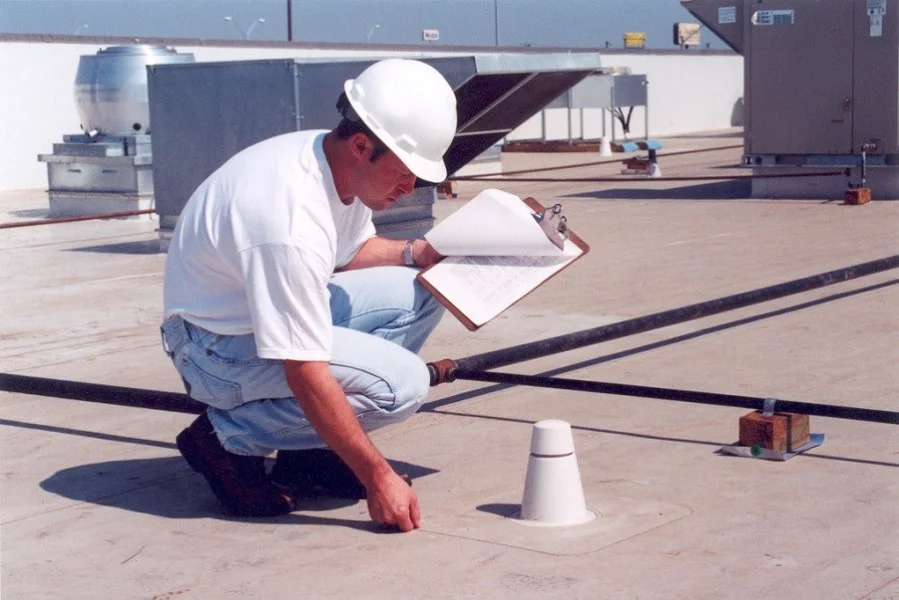
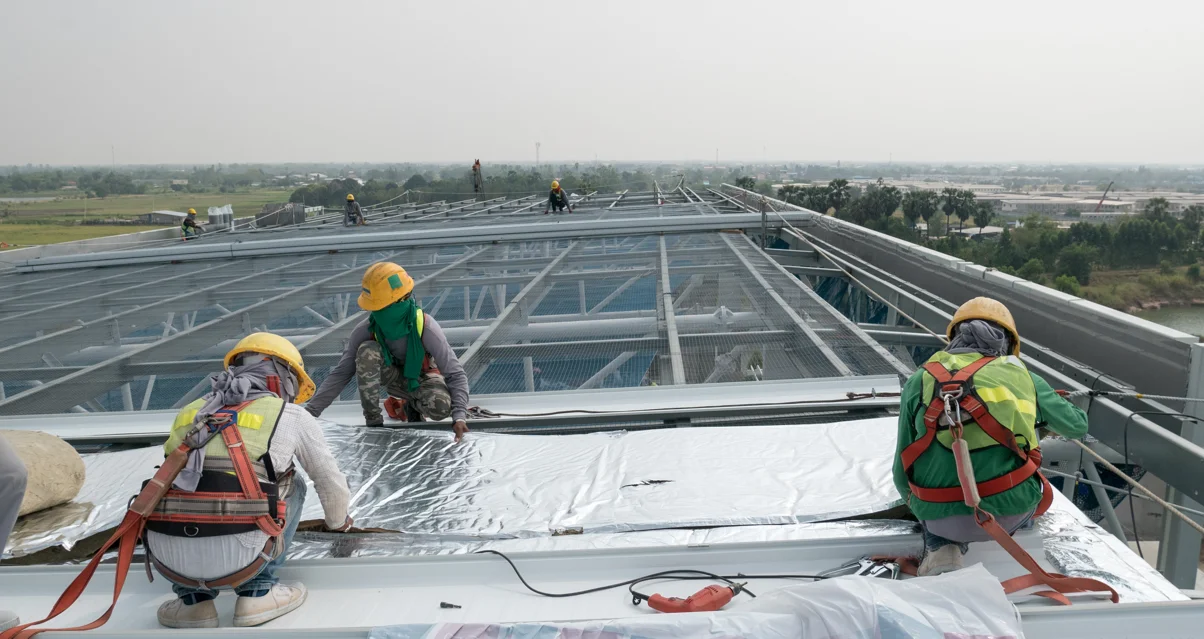
Flat roof leak inspection on a low-slope roof in Central Texas
How We Find Where a Roof Is Leaking
Finding a leak is a process, not a guess. Here is exactly how we trace one from the stain on your ceiling back to the breach on your roof.
1. Start inside. We look at the stain, the attic, and the framing above it. Water tracks down the underside of the decking and along rafters, so the wet spot inside is a starting clue, not the answer.
2. Map the path upslope. From the interior wet spot we work uphill on the roof, because water always enters higher than it exits. The real breach is almost always above and to one side of where you see the drip.
3. Inspect the usual suspects. Flashing, penetrations, valleys, and skylights get checked first because they cause the large majority of leaks. We document each with photos so you see what we see.
4. Water-test when needed. If the source is not obvious, we isolate sections and run water on the roof in stages while someone watches inside, so we confirm the actual entry point instead of patching a guess.
5. Confirm before we quote. You get the diagnosis, the photos, and the scope before any repair is priced. No fix gets sold on a hunch.
When we call the diagnosis, you get the honest answer, even when the honest answer costs us the bigger job. For an active leak, call (737) 230-7099 and we come find the source.
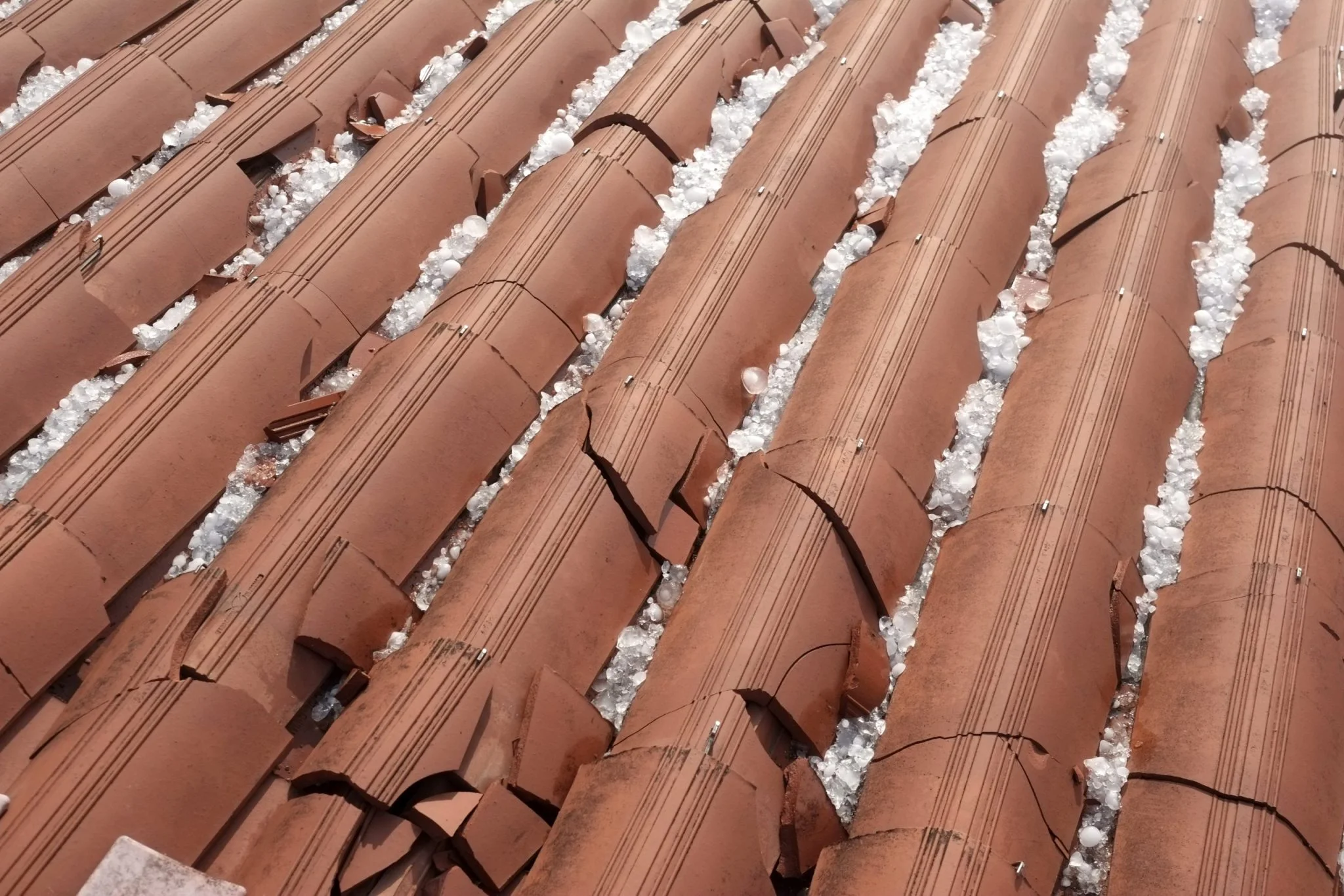
Tile roof with accumulated debris that can cause valley leaks in Central Texas
Emergency Roof Leak Repair
An active leak during or after a storm cannot wait. Water that reaches the decking soaks the plywood, wicks into insulation, and starts growing mold in a Central Texas attic within 24 to 48 hours. A leak that would have been a few hundred dollars to fix turns into rotted decking and drywall once it sits. That is why we prioritize active-leak calls ahead of routine work.
If water is coming in right now, do this: move belongings out from under the drip, put a bucket down, and if you can safely reach the attic, look for the wet spot on the underside of the decking. Do not climb onto a wet roof. A safe temporary tarp from a ladder buys time, but spray sealant or roofing tar on wet shingles only traps moisture and makes the real repair harder. Then call us.
"An active leak is the one job we drop everything for. Water sitting on decking overnight is what turns a cheap fix into a decking-and-drywall bill."
Call Mike at (737) 230-7099 for emergency roof leak repair, or read how we handle storm-driven roof leaks when the damage runs across a whole slope.
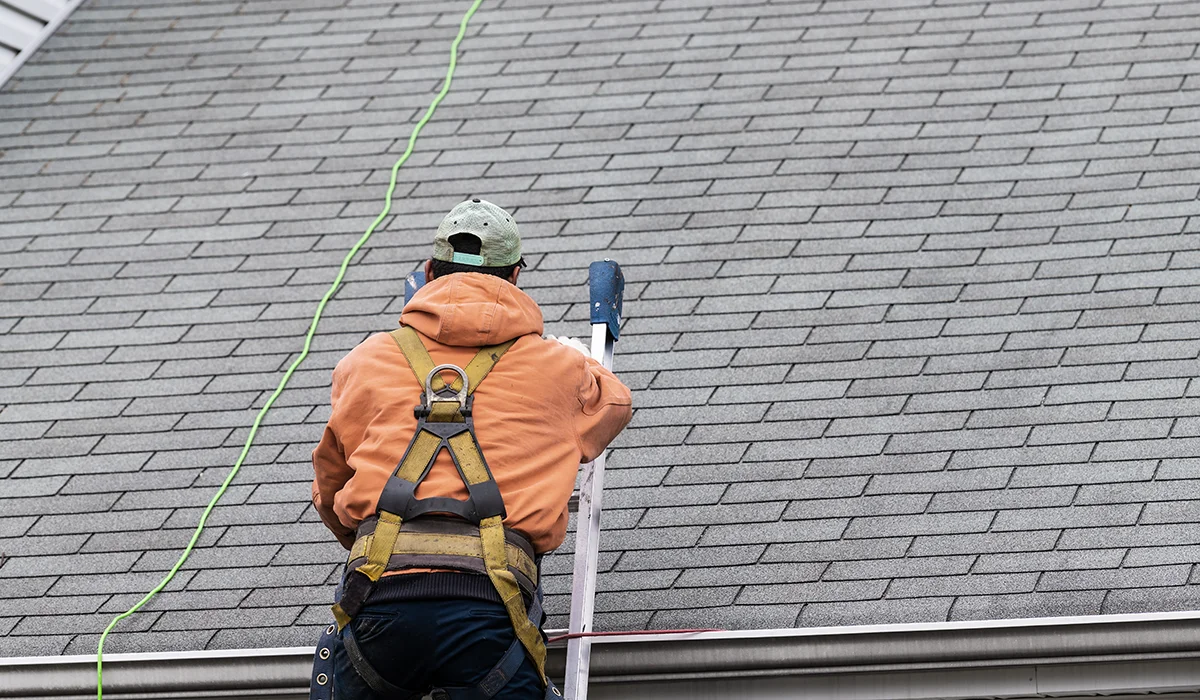
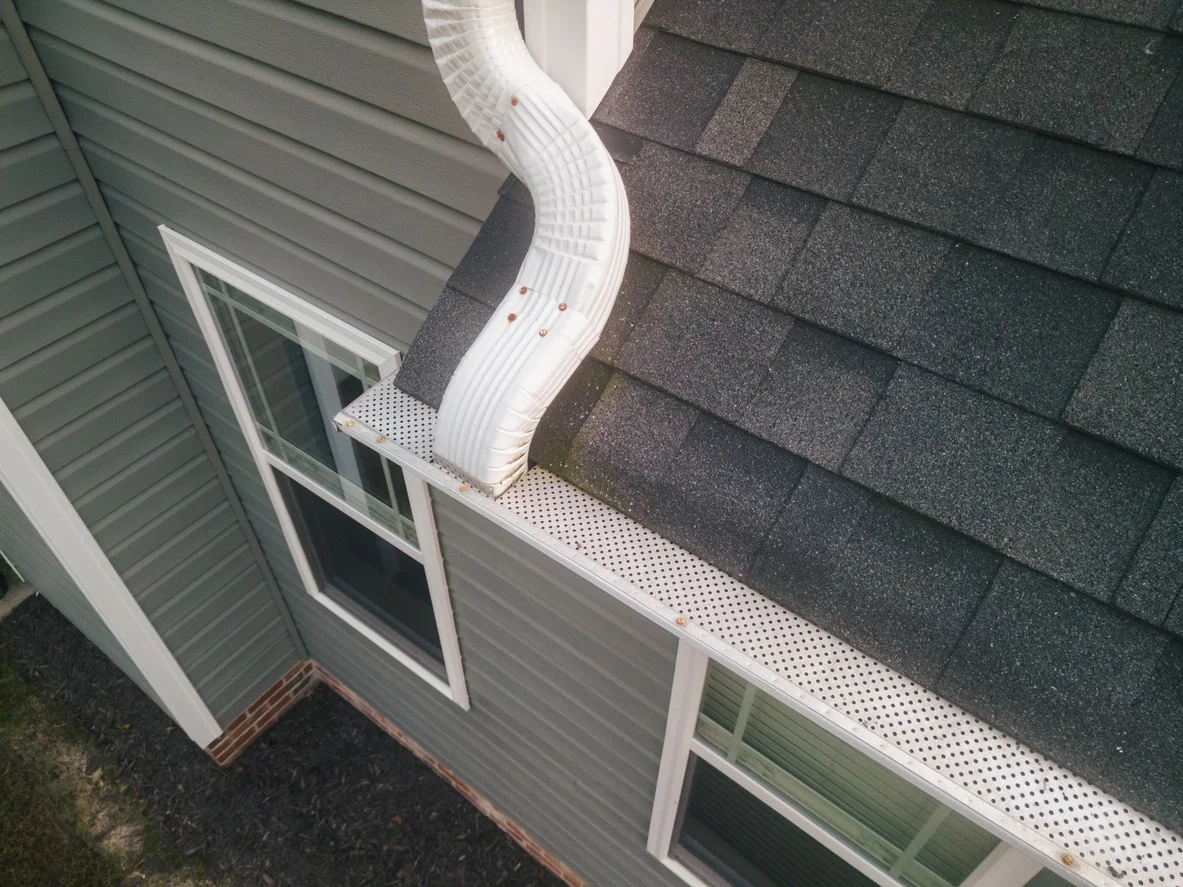
Gutter and downspout detail that affects roof drainage and leak risk
Repairing a Metal Roof Leak
A metal roof leak almost never comes through the panel itself. It comes through a fastener, a seam, or a flashing detail. On an exposed-fastener metal roof, the rubber washer under each screw is the weak point: UV hardens it, it stops sealing, and the screw hole becomes an open path for water. The fix is not sealant slapped over the top. It is backing out the failed fasteners, replacing them with oversized screws and fresh washers, and sealing the penetration correctly.
Standing-seam metal leaks at the seam clips, the ridge, and the flashing where the roof meets a wall or a curb. Sealing a metal roof leak the right way means matching the repair to how the panel system is designed to shed water, not caulking a symptom. We find the actual path first, then fix the detail that failed.
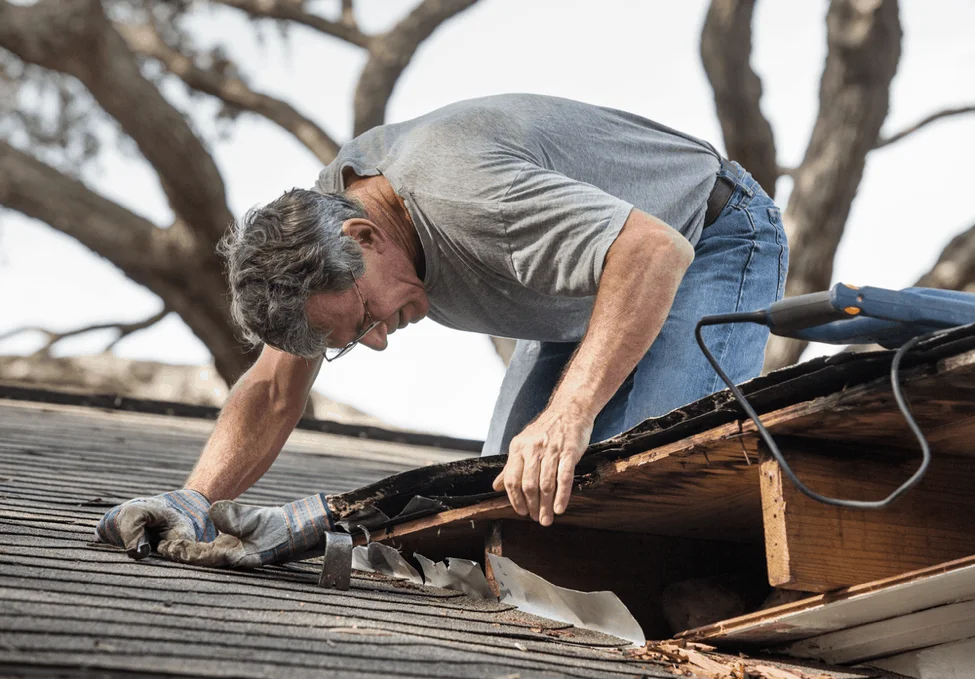
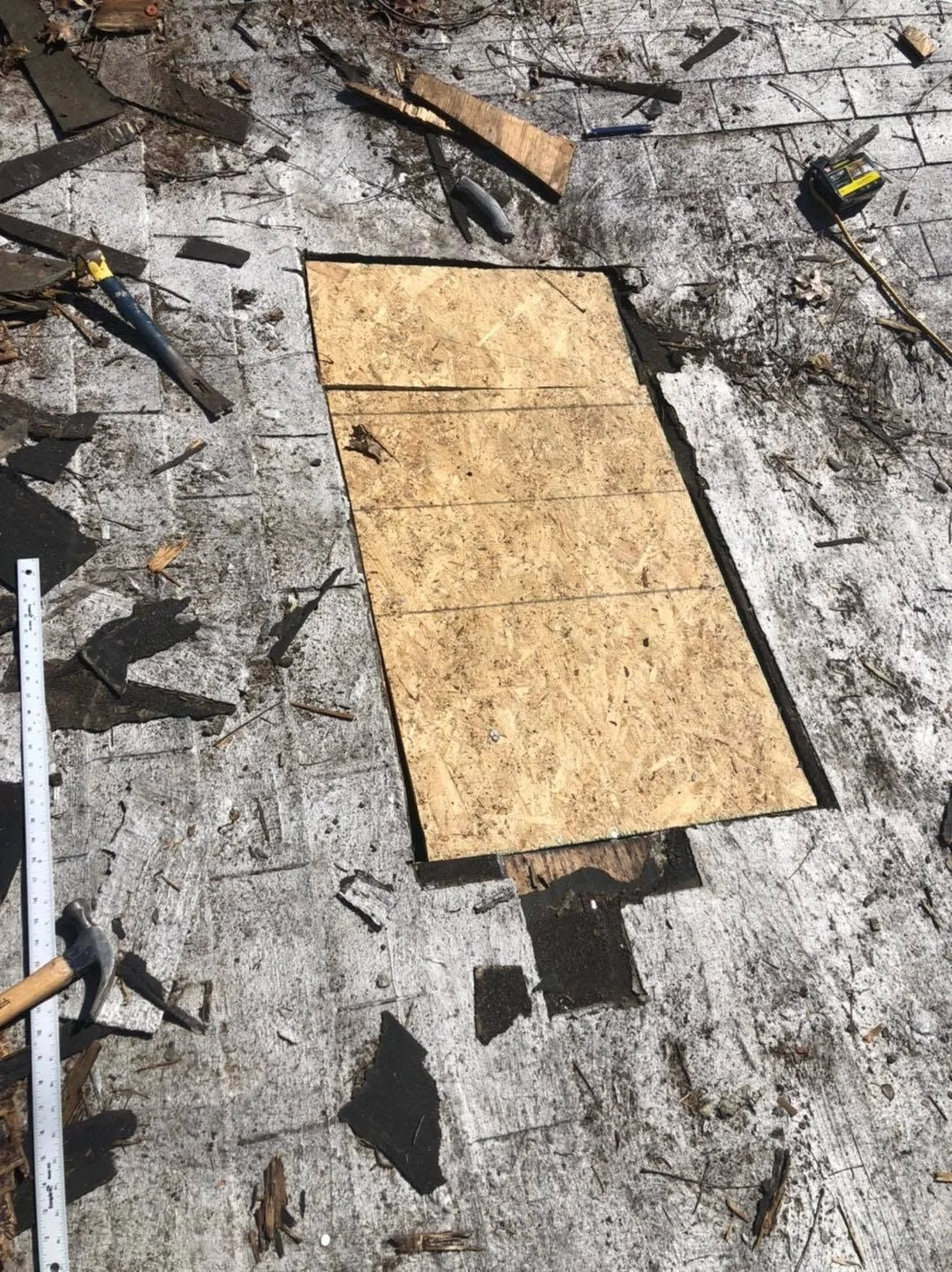
Roof leak repair work being performed on a residential roof in Round Rock, TX
Repairing a Flat Roof Leak
Flat and low-slope roofs leak differently than pitched roofs, and they take a different eye to diagnose. Water does not run off a flat roof the way it sheds off a shingle slope, so it sits, finds the smallest seam failure, and works its way in. The leak points we check first on a flat roof:
- Seams and membrane laps where two sheets are joined
- The drain and any low spots where water ponds after a rain
- Flashing where the roof meets a parapet wall, a curb, or a rooftop unit
- Penetrations for vents and pipes coming through the membrane
Ponding is the quiet killer on flat roofs. Standing water sits on a seam long enough and it finds the weak point. Fixing a flat roof leak means addressing the seam or detail that failed and, where ponding is the underlying cause, getting the water moving to the drain again. A patch over a ponding problem fails by the next heavy rain.
Flat roof leak inspection on a low-slope roof in Central Texas
When a Leak Repair Is the Wrong Call
We will tell you honestly when a targeted leak repair is not the right answer. A leak repair is the smart fix when the roof is structurally sound, the damage is isolated to a flashing detail or a penetration, and the roof is not near the end of its life.
Don't spend money chasing individual leaks on a roof that is failing everywhere. If your roof is past 20 years old, has multiple active leaks across different slopes, or the decking is already soft from long-term water intrusion, patching one leak just moves the next call down the road a few weeks. On a roof like that, repeated repairs cost more than they buy, and a full roof replacement is the honest, lower-total-cost path. We would rather tell you that after the inspection than sell you a patch that fails by the next storm.
Stop the Leak Before the Next Rain
A leak does not fix itself, and every rain makes it worse. Call Mike at Over and Above Contracting for a free leak inspection and a straight answer on the source. We prioritize active leaks and trace the water to where it actually enters. Call (737) 230-7099 or request a free quote.
There is no flat price on a leak repair, because the cost is driven by the source, not the symptom. The real cost drivers are where the water is entering (a pipe boot is cheaper than a rebuilt valley), how far the water has already traveled into the decking and insulation, the roofing material in place, and the roof pitch and accessibility. A leak caught early at a single flashing point is a minor repair. The same leak ignored a season, once it rots the decking, costs multiples more. Over and Above gives you a free inspection and an accurate written scope before any number is set. Every roof leaks differently. Contact Over and Above Contracting for an accurate estimate.
How does a roofer find where a roof is leaking?+
By working backward from the drip. Water enters high on a roof and travels down the underside of the decking or along a rafter before it shows up inside, often several feet from the actual breach. A roofer starts at the interior stain, moves up into the attic to find the wet path on the framing, then works uphill on the roof to the entry point. Flashing, penetrations, valleys, and skylights get checked first because they cause the large majority of leaks. If the source is not obvious, we water-test the roof in sections while someone watches inside to confirm the exact entry point before repairing anything.
Is it safe to go on the roof to stop a leak during a storm?+
No. A wet roof, especially during a storm, is dangerous and not worth the risk. Handle a leak from inside during the storm: move belongings out from under the drip, put a bucket down, and if you can safely reach the attic, note where the water is coming through the decking so the source is easier to find later. A safe temporary tarp can wait until the roof is dry and you can work from a ladder without climbing onto the slope. Do not apply spray sealant or roofing tar to wet shingles, it traps moisture and makes the permanent repair harder. Once the weather clears, call (737) 230-7099 and we trace the leak to its source.
Does a roof leak repair include a full leak inspection?+
Yes. Every leak repair with Over and Above starts with a free inspection that traces the water to its actual entry point, not the spot where it drips. We check the attic and framing inside, then work uphill on the roof through the usual leak sources: flashing, pipe boots and vents, valleys, and skylights. Each finding is documented with photos so you see the source before any repair is priced. That inspection is how you avoid paying to patch a guess. If the roof turns out to have problems beyond the one leak, you hear about them before work starts, not after.