Takes about a minute. We'll follow up within one business day. No pressure, no upsells.
Round rock · Trusted Locally
Why Choose Over and Above Contracting for Gutter Installation Sized for Central Texas Downpours, Not the Catalog
Gutter installation is one of the cheapest ways to protect the most expensive parts of your house, and the part most companies get wrong is sizing. A standard 5-inch K-style gutter is fine for a light-rain climate. It is not fine for a Central Texas spring, when a single cell can drop two or three inches of rain in an hour and overshoot an undersized gutter completely. Over and Above Contracting sizes the gutter and the downspouts to the roof area feeding them and the rain intensity we actually get here, then hangs it to the fascia the right way. Mike Ennis runs every job personally, so the person who assesses the roof edge is the person who installs the system. If you need gutters installed, repaired, or replaced, call (737) 230-7099.
Owner-operated out of Round Rock and serving Williamson County and the greater Austin metro, Over and Above installs and repairs gutters as part of the roofline it already services, so the soffit, fascia, roof edge, and drainage all get looked at together instead of in isolation. Gutters, soffit, and fascia work as one system, and a failing gutter is what rots the fascia behind it. You get an honest read on whether a repair holds or a full replacement is the smarter spend. No upsell toward seamless when a sectional repair is the right fix.
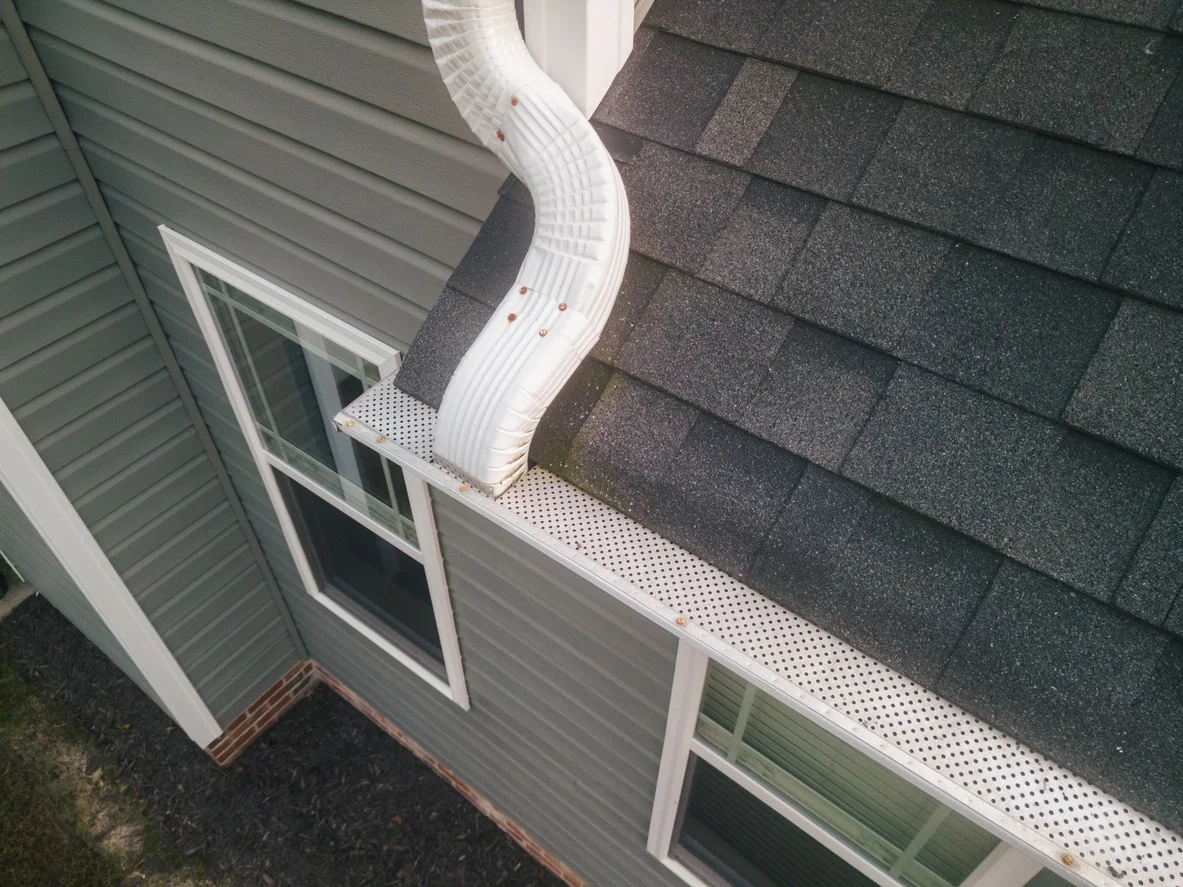
Roofline and gutter detail on a residential home in Round Rock, TX
Gutter Installation
Gutter installation on a typical single-story Round Rock home runs most of a day: measuring the fascia runs, setting the pitch toward the downspouts, fabricating or cutting the sections, hanging on hidden brackets, and sealing the corners and outlets. The details that decide whether a gutter lasts are pitch and downspout count, not the color you pick off the sample. Too little pitch and water sits and breeds mosquitoes; too few downspouts and heavy rain backs up over the front lip no matter how big the trough is.
We also look at where the water goes once it leaves the downspout. Dumping it two feet from the slab is how you get a wet foundation on the expansive clay soils common across the Austin metro, the same soils that heave and crack when they swing from bone-dry to saturated. Downspout extensions or a buried drain line that carries water well away from the house are part of doing the install right, not an afterthought. Planning new gutters? Get a free quote or call (737) 230-7099.
Seamless Gutters vs Sectional Gutters
Seamless and sectional gutters both have a place, and the honest answer depends on your house and your budget, not a sales script. Here is how the two compare so you can decide with real information.
Seamless: Fewer Leak Points
A seamless gutter is roll-formed to the exact length of each fascia run on site, so the only joints are at the corners and outlets. Fewer seams means fewer places to fail, and seams are where gutters leak first. On a long straight run, seamless is the cleaner, longer-lasting choice.
Seamless: Custom Fit
Because each length is made to measure, seamless gutters follow the fascia line without the gaps and mismatches you get piecing sections together. The trade-off is that it is fabricated on site with specialized equipment, so it costs more up front than sectional.
Sectional: Lower Cost
Sectional gutters come in pre-cut lengths joined with connectors. They cost less to buy and are the practical choice for a short run, a targeted replacement of one damaged stretch, or a budget where seamless does not pencil out.
Sectional: Easier Piece Repair
When one length gets crushed by a falling limb, a sectional run lets you replace just that piece. On a seamless run, a damaged section usually means re-forming a longer length. For spot damage, sectional is genuinely simpler to fix.
The Joints Are the Weak Point
Every joint on a sectional gutter is a spot where sealant ages, cracks in our thermal swings, and eventually drips onto the fascia. That is why we lean seamless on long runs and reserve sectional for shorter spans and piece repairs where the joint count stays low.
Material Matters Either Way
Aluminum is the workhorse for both: rust-proof, light, and available in seamless. Steel is stronger for impact but can rust. Copper is premium and lasts decades. We match the material to the house and the budget rather than defaulting to one.
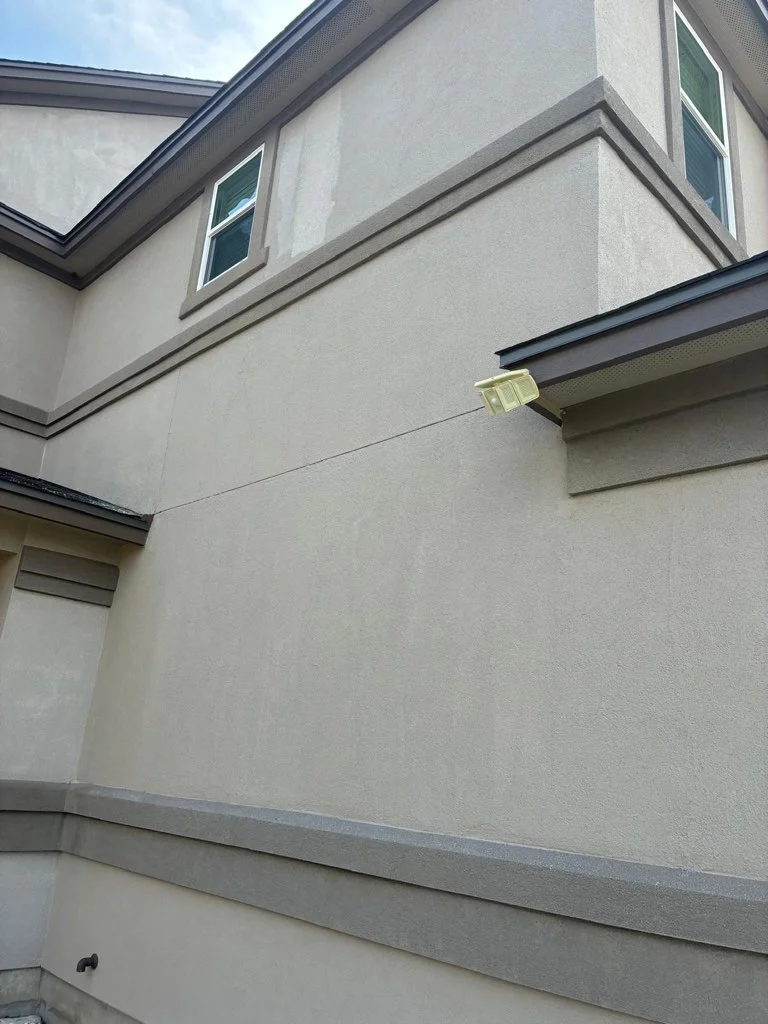
Roof edge and gutter inspection on a residential home in Williamson County
Gutter Repair
Gutter repair is the right call when the run is basically sound and the problem is isolated to a joint, a hanger, or a clog. Rain gutter repair covers a handful of predictable failures, and most of them are a fraction of the cost of a full replacement if you catch them before the fascia behind starts to rot. The repairs we get called for most:
1. Leaking seams and corners. Sealant at a sectional joint or a mitered corner ages, cracks, and drips. We clean the joint back to bare metal and reseal it properly, not smear caulk over the failing bead.
2. Sagging runs and pulled hangers. When brackets pull loose or spread too far apart, the gutter sags, holds water, and drags on the fascia. We re-hang on properly spaced hidden hangers and reset the pitch.
3. Loose or clogged downspouts. A downspout that has separated from the elbow or is packed with debris backs water up the whole run. We reconnect and clear it so the system drains.
4. Overflow from undersized systems. Sometimes the gutter is not broken, it is too small for the roof feeding it. When that is the real problem, more downspouts or a size upgrade fixes it where sealing joints never would.
"A leaking gutter joint is a twenty-minute fix. The rotted fascia behind it, once you ignore that drip for a season, is the real bill. We tell people to catch it early."
Not sure whether a repair holds? Call (737) 230-7099 and we give you a straight read before you spend on a full replacement.
Roofline and gutter detail on a residential home in Round Rock, TX
Gutter Replacement
Gutter replacement is the honest call when the run is past repairing: rusted through, sagging along its whole length, pulling the fascia apart, or so undersized that no repair keeps up with our rain. Patching one joint on a system that is failing everywhere just moves the next call down the road, the same way chasing individual leaks on a worn-out roof does.
Replacement is also the smart time to fix the mistakes of the original install. Most of the failed gutters we pull off Round Rock homes were undersized, under-pitched, or short on downspouts from day one. A replacement lets us size the new system to the roof area actually feeding it, add the downspouts the roof needs, and route the water away from the foundation on the expansive clay soils across the metro. It is also the natural time to look at the fascia behind the old gutter, because that is where the hidden water damage hides.
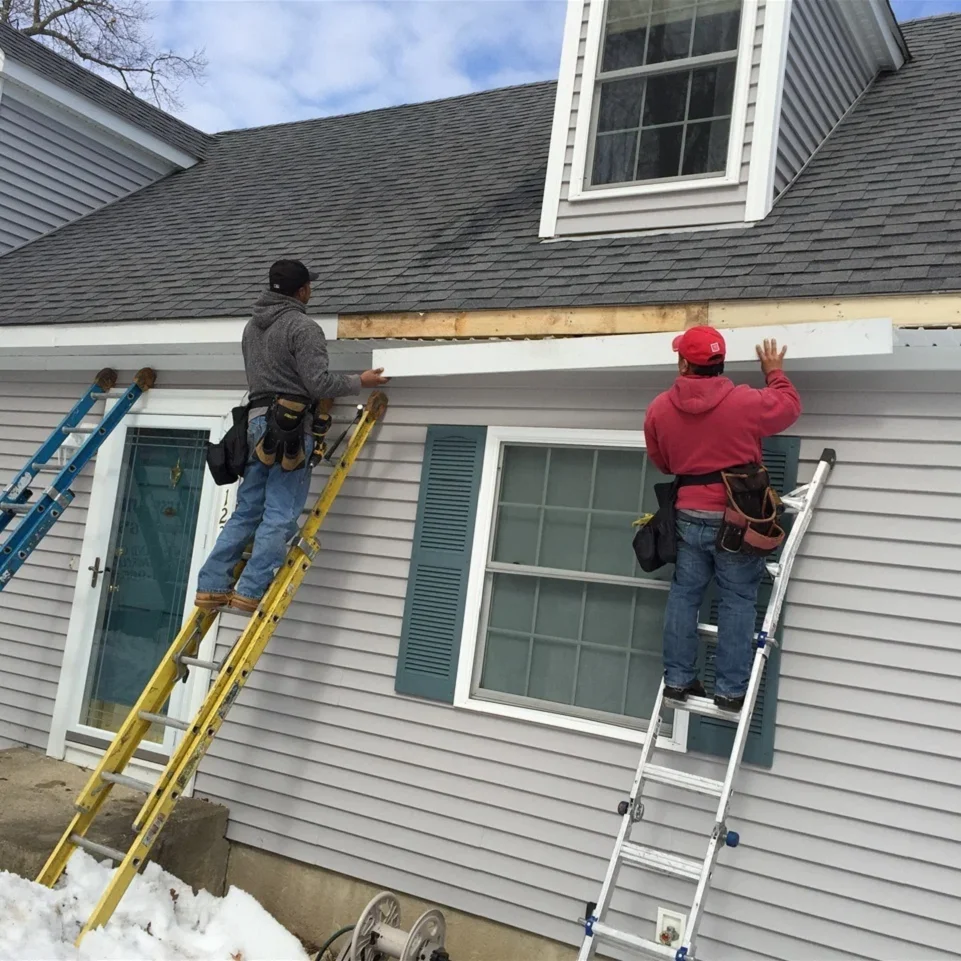
Fascia and soffit work behind a gutter replacement in Central Texas
Why Gutters Matter More on a Central Texas Roof
Gutters get treated like an accessory, but they are the drainage system that protects the three most expensive parts of your house: the roof edge, the fascia and soffit, and the foundation. When gutters overflow or clog, water sheets back under the roof edge, saturates the fascia, and pools against the slab. Two conditions in this area make that worse than it is elsewhere.
The second condition is the rain pattern itself. Central Texas does not get gentle all-day drizzle; it gets fast, hard cells that dump a lot of water in a short window. An undersized or clogged gutter cannot move that volume, so it overflows exactly when it matters most, and the water it dumps at the foundation hits expansive clay that swells and shrinks with every wet-dry cycle. A gutter that clears a light rain and fails in a downpour is a gutter that fails when your foundation actually needs it. That is why we size and clear for the worst rain, not the average one. Neglected gutters are also a leading cause of the roof-edge and fascia damage we get called to repair, which is exactly why we look at the whole roofline together.
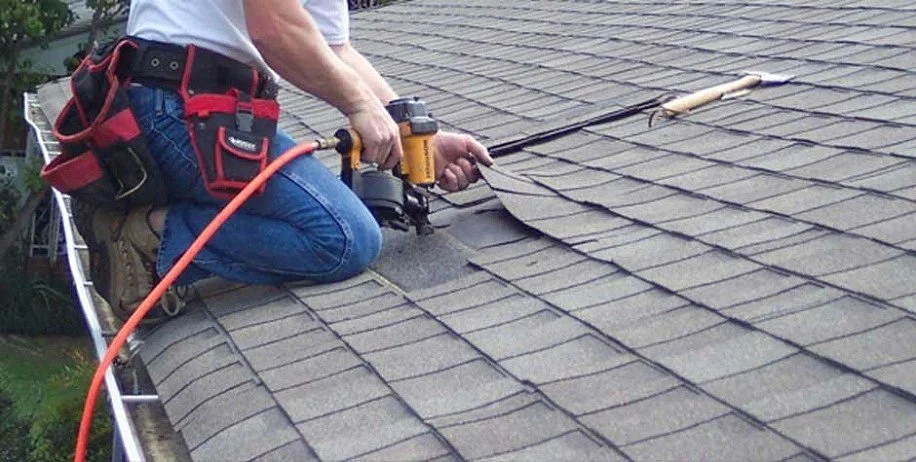
Roof edge and gutter inspection on a residential home in Williamson County
When New Gutters Are the Wrong Call
We will tell you honestly when new gutters, or gutter guards, are not the right spend. A repair or a good cleaning is the smart fix when the existing run is sound and the real problem is a clog, a single failed joint, or a pulled hanger.
Don't replace a whole gutter system that just needs the downspouts cleared and two corners resealed. And be skeptical of anyone selling you premium gutter guards as a cure-all: under the live-oak and pecan debris load common here, some guard styles clog on top and actually make cleaning harder, not easier. Guards help on the right roof with the right debris, and they are a waste of money on the wrong one. If your gutters are only a few years old and draining fine, you probably do not need us yet. Clear the downspouts, check the pitch, and call when something is actually failing. We would rather tell you that than sell you a system you do not need.
Get Gutters That Keep Up With the Rain
Whether you are putting gutters on a new build, repairing a leaking run, or replacing a system that never kept up with our rain, the sizing and the pitch are what make it last. Call Mike at Over and Above Contracting for a free assessment and a straight answer on repair versus replacement. Call (737) 230-7099 or request a free quote.
There is no flat price on gutter installation, because the cost is driven by the house, not a single number. The real cost drivers are the total linear footage of gutter your rooflines need, whether you choose seamless or sectional (seamless is fabricated on site and costs more up front but has fewer leak-prone seams), the material (aluminum, steel, or copper), whether you add gutter guards, the condition of the fascia the gutters mount to, and the number of stories and how accessible the roof edge is. A short single-story sectional run is a modest job. Seamless gutters wrapping a two-story home with fascia repair underneath is a bigger one. Over and Above gives you a free assessment and an accurate written scope before any number is set. Contact Over and Above Contracting for an accurate estimate.
Are seamless gutters worth it over sectional gutters?+
On most long, straight runs, yes. A seamless gutter is roll-formed to the exact length of each fascia run, so the only joints are at the corners and outlets. Since seams are where gutters leak first, fewer seams means a longer-lasting, lower-maintenance system, which matters in Central Texas where thermal swings crack sealant at every joint over time. Seamless costs more up front because it is fabricated on site with specialized equipment. Sectional gutters, joined from pre-cut lengths, cost less and are the practical choice for a short run, a tight budget, or a targeted repair of one damaged stretch. We match the choice to your house and budget rather than pushing one option.
How do I know if I need gutter repair or full replacement?+
It comes down to whether the problem is isolated or systemic. Gutter repair is the right call when the run is basically sound and the issue is a single leaking joint, a pulled hanger, a clog, or a loose downspout. Replacement is the honest answer when the gutters are rusted through, sagging along their whole length, pulling the fascia apart, or so undersized they overflow in every hard rain no matter how clean they are. Patching one joint on a system that is failing everywhere just delays the real fix. We give you a straight read after looking at it, and we will tell you when a repair holds so you do not spend on a replacement you do not need yet.
Why do my gutters overflow even when they are clean?+
Because the gutter is too small for the roof feeding it, or it does not have enough downspouts. This is the most common gutter mistake we find on Round Rock homes: a standard 5-inch gutter installed on a large or steep roof plane simply cannot carry the water volume from a hard Central Texas cell, so it sheets over the front lip even when it is spotless. The fix is not sealing joints, it is sizing the system to the rain we actually get. On larger roofs we upgrade to 6-inch gutters and 3x4 downspouts and add outlets where the roof needs them, so the system keeps up in a real downpour instead of only in a light rain.