
Roof Repair vs. Replacement After Hail Damage
A storm just rolled through Williamson County and your roof took a hit. Here is how to tell whether you need a repair, a full replacement, or nothing at all before you call your insurer.
Call directly(737) 230-7099Tell us what you need.
Takes about a minute. We'll follow up within one business day. No pressure, no upsells.
Why Choose Over and Above Contracting for Roof Repair vs. Replacement After Hail Damage
Whether hail damage calls for a roof repair or a full replacement depends on where the hail landed, how old the roof is, and what an adjuster can document. Over and Above Contracting owner Mike Ennis scopes that call across Round Rock and Williamson County every storm season: isolated damage on a sound roof is usually a repair, while widespread bruising or an aging, brittle roof points to replacement. Get a straight read before you file your claim.
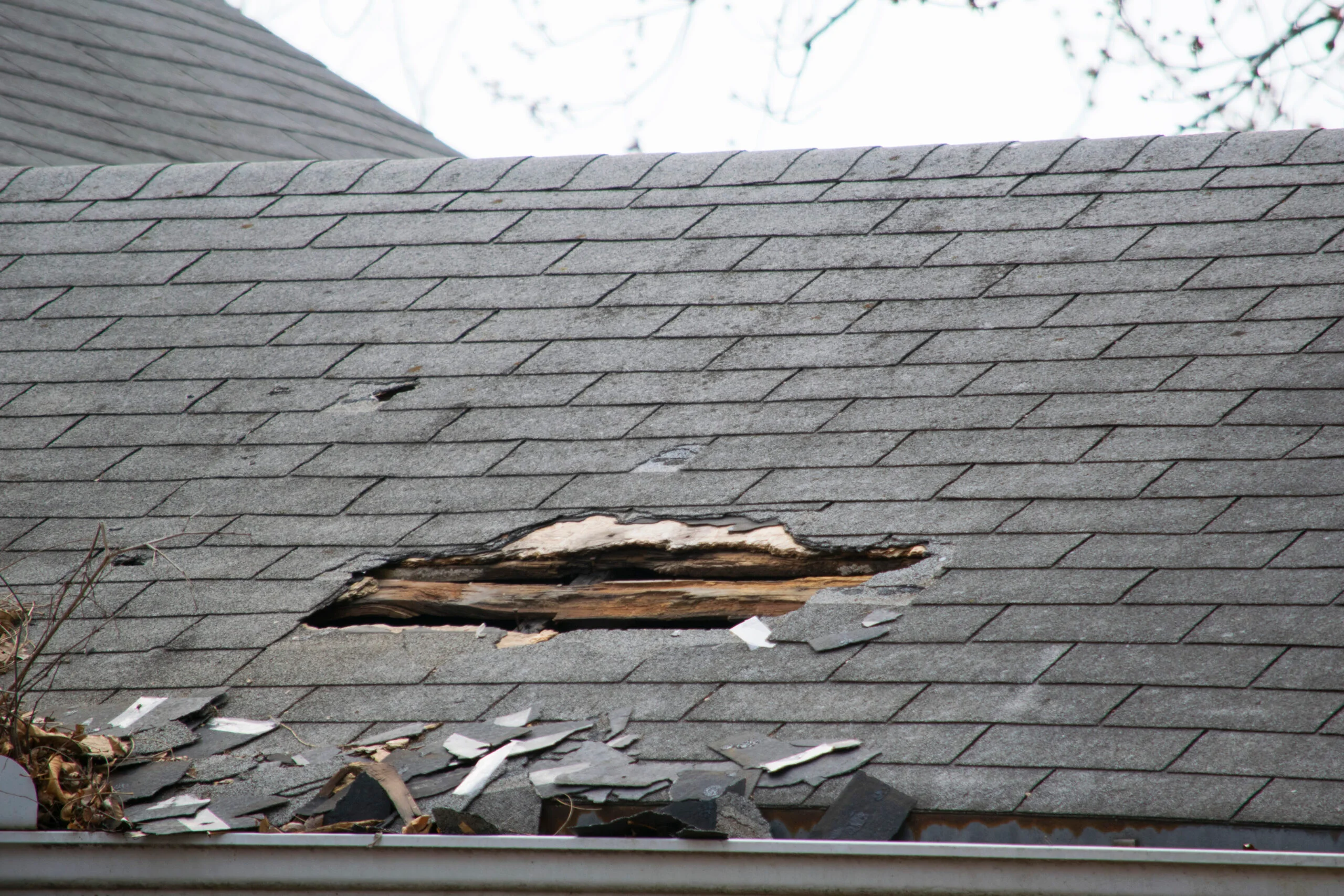
Roof repair showing severe hail damage to asphalt shingles with exposed wooden decking on a Central Texas home.
Roof Repair vs. Replacement After Hail: Which One Do You Need?
Repair is the right call when hail damage is isolated and the rest of the roof still has real service life left. If the bruising sits on one slope, the shingles still seal flat, and the decking and underlayment underneath are dry, a targeted hail damage roof repair in Central Texas restores the roof without the cost of a full tear-off. Replacement becomes the honest answer when the field of the shingle mat is failing across multiple slopes, granule loss is widespread, shingles are already curling with age, or we open the roof and find soft decking and repeat leaks that patch after patch never fixed.
Age is the factor homeowners underweight most. Two roofs can take identical hail, and the younger one is a clean repair while the older one is replacement math, because the brittle shingles on the older roof will crack again at the next freeze-thaw swing. The decking tells us the truth on your roof, so we look before we quote.
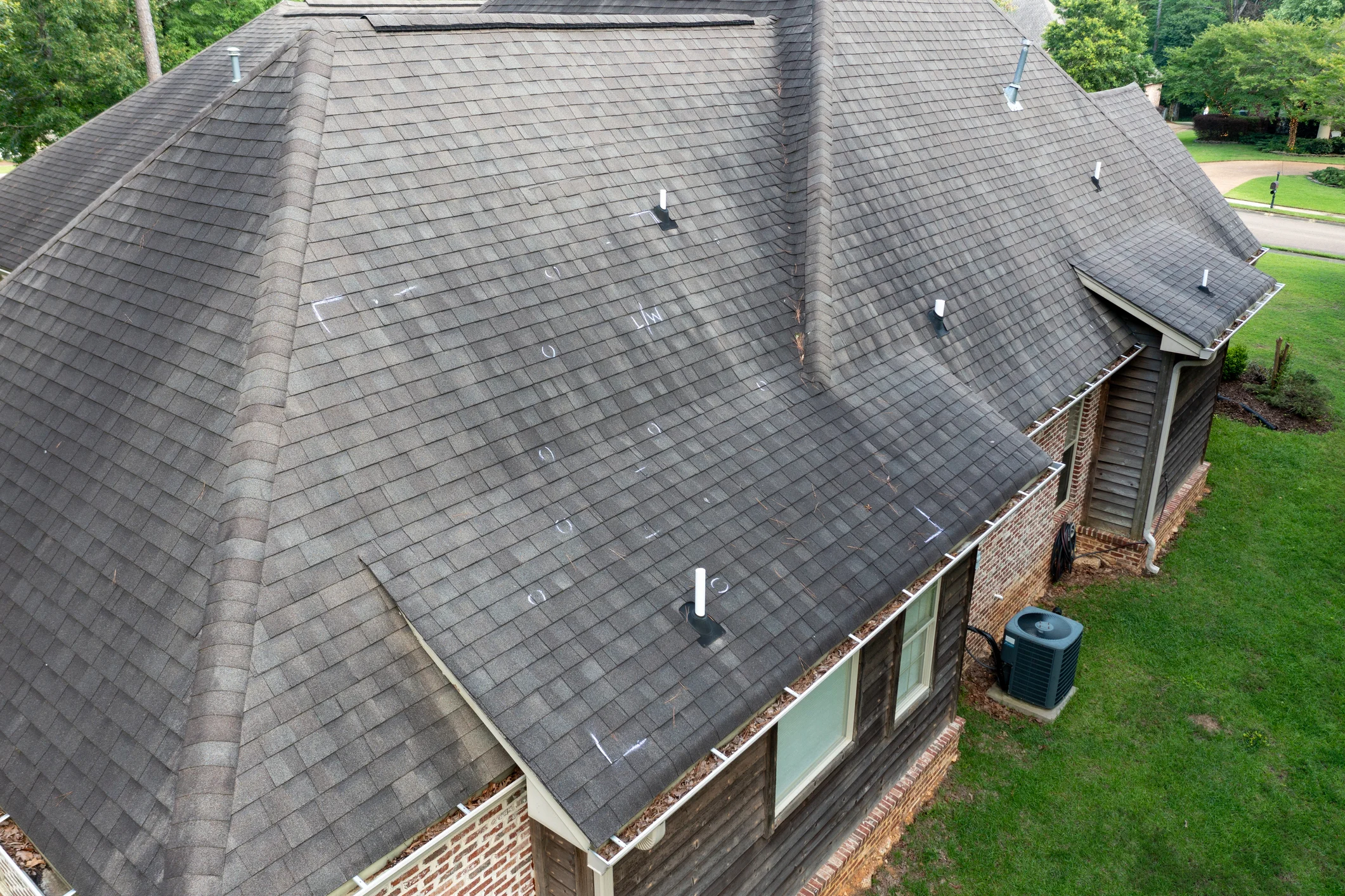
Asphalt shingle roof replacement on a residential home after widespread hail damage required a full tear-off.
How Much Hail Damage Means You Need a Full Roof Replacement
How much hail damage needs a full roof replacement comes down to density and spread, not a single dented shingle. Insurers and roofers both think in terms of damage per square (a 10-by-10-foot section). A couple of impact marks on one slope is a repair. When hail bruising crosses that threshold across most of the roof, a full replacement is usually the only fix that holds and the only one insurance will approve.
Here is how we read it on a Central Texas roof:
- Clear repair: Damage confined to one slope or one feature, like a cracked pipe boot, a lifted ridge cap, or dented flashing that has not let water in yet.
- Borderline: Scattered bruising on two slopes with granule loss starting to show. Age and shingle brittleness decide this one, and it is where a second opinion earns its keep.
- Clear replacement: Widespread mat fractures, heavy granule loss exposing the asphalt, soft or wet decking, or a roof already near the end of its life that hail pushed over the edge.
The tricky part is that hail bruising is often invisible from the ground. A stone knocks granules loose and fractures the mat beneath the surface without producing an immediate leak, so a roof can look fine for months while it quietly burns through its remaining service life. That is the hidden damage we document on a free post-storm roof inspection, and it is the single most common thing homeowners miss when they try to eyeball it themselves. If your neighborhood took a hit, call Mike at (737) 230-7099 before you assume it was cosmetic.
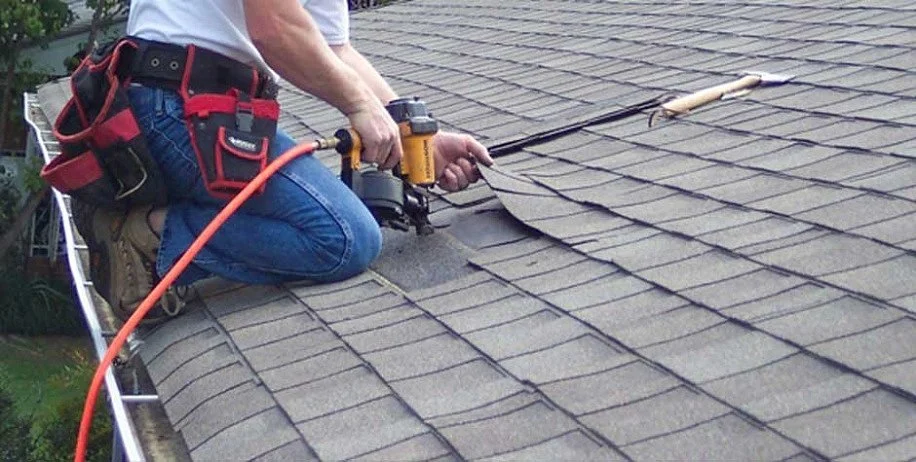
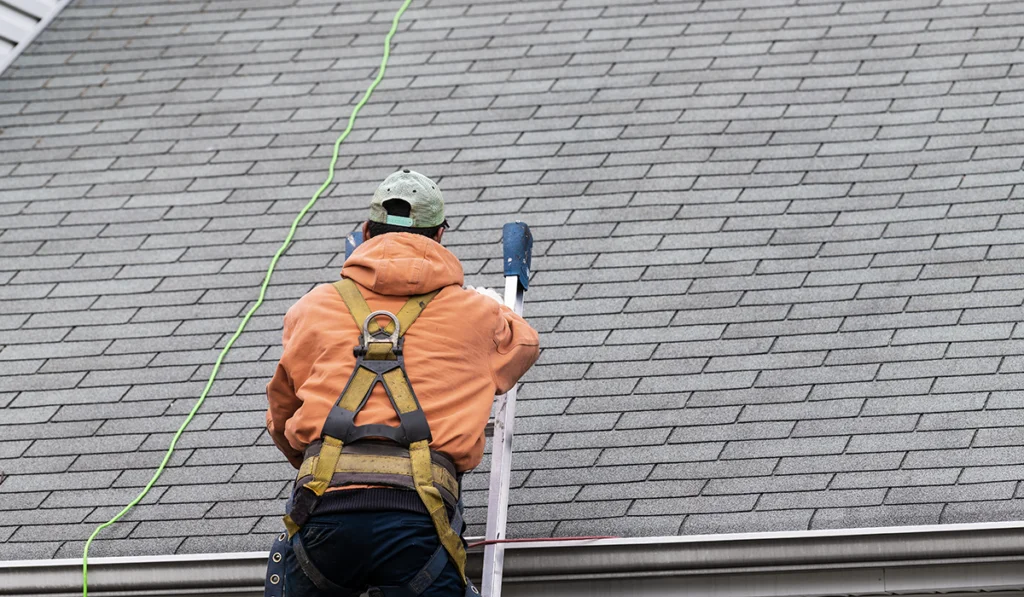
Roof inspection being performed on an asphalt shingle roof to document hail damage for an insurance claim.
What an Insurance Adjuster Looks for After Hail
An adjuster is not looking for the same things a homeowner notices. Dented gutters and a few missing shingles get attention, but the adjuster is counting hits per square and looking for specific markers that prove the damage is functional, not cosmetic. Knowing what they check is what keeps a legitimate claim from getting underpaid.
What the adjuster looks for
- Density of impacts per square, because scattered marks read as cosmetic and dense impacts read as a replacement.
- Bruising you can feel, the soft spot where the mat fractured under the granules, which is the proof a hit was functional.
- Granule loss in the gutters and at downspout splash zones, a fast tell for how hard the roof was hit.
- Collateral damage on soft metals like gutters, vents, and A/C fins, which corroborates the storm date and intensity.
- Fresh versus old damage, because an adjuster will deny marks they decide predate the storm event.
"We document the roof the way the adjuster reads it, with photos, chalk marks, and a count per square, so the damage speaks for itself. That is how an honest claim gets approved without padding it."
This is why the sequence matters: get a qualified inspection before you file, not after. We walk the roof with that checklist, mark and photograph every functional hit, and hand you documentation that meets the insurer's requirements. If a claim is involved, our storm damage restoration and insurance claim help means we meet the adjuster on the roof and keep the scope honest in both directions.
Get a Straight Read Before You File
Not sure whether you are looking at a repair or a replacement? That is exactly what a free inspection answers. Tell us what you are seeing and we will come out, document the roof the way your adjuster will, and give you a straight read before you file anything. Request a free inspection online or call Mike directly at (737) 230-7099.
Asphalt shingle roof replacement on a residential home after widespread hail damage required a full tear-off.
When a Partial Repair Is False Economy
A partial repair becomes false economy the moment it fails to buy you meaningful time. Patching one slope on a roof that is already losing granules everywhere is money spent on a roof that is going to need replacing within a year or two anyway, and in Central Texas that window shrinks fast under the UV load and thermal cycling that break shingles down from summer.
A repair is the wrong call when:
- The shingles are brittle enough that the repair area cracks again at the next freeze-thaw swing.
- You cannot match the existing shingles, so the patch leaves a visible, mismatched section that hurts resale.
- The decking under the damage is already soft, which means water has been getting in and a surface patch hides the real problem.
- Insurance would cover a full replacement anyway, because the storm damage crossed the threshold and a repair just leaves value on the table.
That last point is the one homeowners miss most. After a qualifying hail event, a replacement your policy already owes can cost you far less out of pocket than a cash repair, so settling for a patch when the roof qualifies for more is the most expensive mistake we see. We will not sell you a patch when the roof is past its serviceable life, and we will not push a replacement when a repair genuinely holds. If a spring hail cell hit your slope in Temple, Killeen, or anywhere across Williamson County, get our take before you decide. Call (737) 230-7099 and we will tell you straight.
Frequently Asked Questions
Does insurance cover roof repair or replacement for hail damage? +
What are the signs hail damage means you need a new roof? +
Can hail damage be invisible from the ground? +
Should I call my insurance company or a roofer first after a hailstorm? +
Related
You Might Also Need
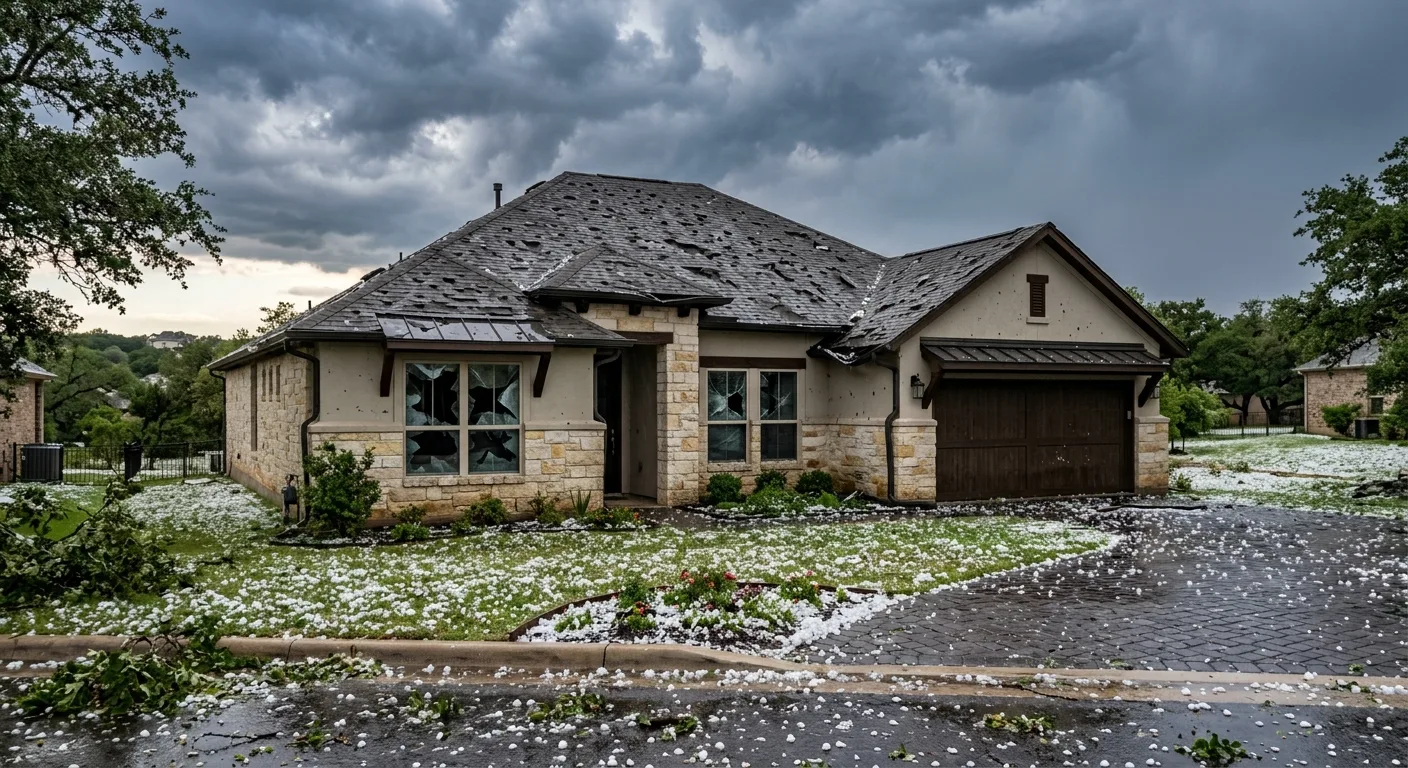
Hail And Storm Damage Restoration
Hail-damaged roof? Get it inspected before you call your insurer. Over and Above Contracting restores storm-damaged roofs right. Call Mike…
Reliable Repairs Emergency Roofing Services
Roof leaking after a storm? Here's what to do first. Over and Above Contracting responds fast, patches the damage, and protects your home.…
Residential Roofing Installation
New roof installation done right from decking to ridge cap. Get a free estimate from Mike Ennis at Over and Above Contracting. Call (737)…
From the Blog
Choosing The Right Roofing Contractor 6 Factors To Consider
Don't hire the wrong roofer. Here are 6 critical factors — licensing, local reputation, experience, and more — to help you make a confident,…
Common Signs Your Roof Needs Storm Restoration After High Winds And Hail
High winds and hail can damage more than just shingles. Learn the warning signs your roof needs storm restoration — and when to call a Round…
Hidden Roof Damage Caused By Texas Hailstorms
Texas hail hides damage that shows up months later. Learn what to look for after a storm — and why a professional inspection protects your…